
From aspirin to UK awards, scientists excel at Longridge
Making science relevant lies at the heart of both the recent success of Longridge pupils nationally and its work across the school estate.
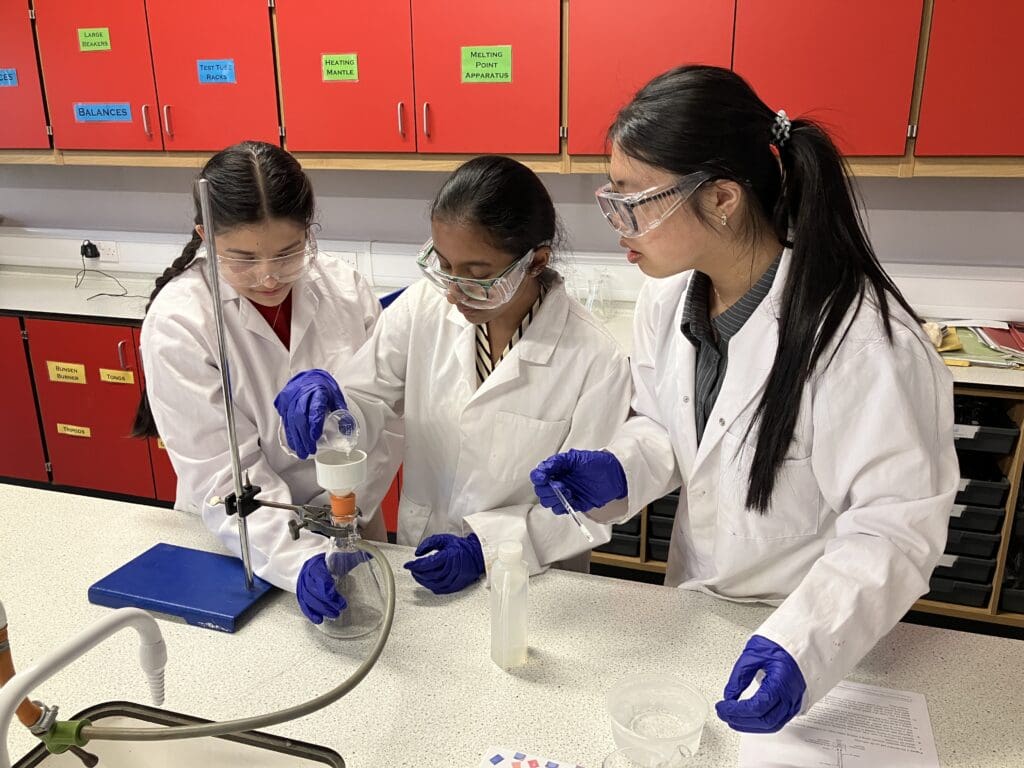
Whether in a classroom preparing aspirin (see picture above) or claiming top UK awards, visiting institutions or hearing from visiting lecturers, science is very much a real-life subject at Longridge Towers School.
The School has hit the headlines again with senior pupils excelling in the UK Science Olympiads, run by the Royal Society of Chemistry, UK Biology Competitions and the University of Oxford. Alexander earned a gold medal in Physics, while Mahi won bronze in both Biology and Physics, which has only fuelled her desire to enter a career in medicine. Jamie earned silver medals in Chemistry and Physics, alongside bronze medals for Liam, Sam, Xiying, Harris, Connor and Jerry, while more Longridge pupils had their work recognised with highly commended awards.
“That level of achievement is quite unprecedented,” said Mrs Ward, Head of Science at Longridge, “and we are very proud of the work all of our students have put in to achieve such national recognition.
“It is an indication of not just the academic standards we are working to at the school but also the depth of enthusiasm and sheer work ethic that the pupils have for the science subjects.”
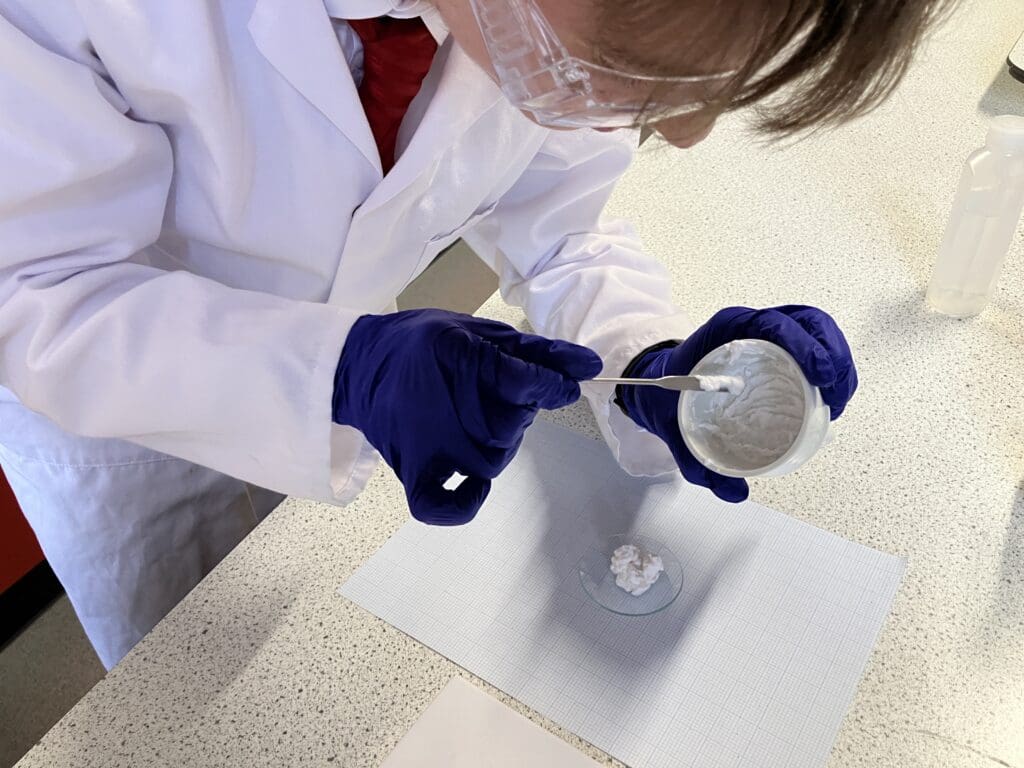
Mrs Ward gave us a tour of the science department recently and that was when we came across pupils synthesising aspirin (left).
“This is a good example,” she explained, “of the way we structure the curriculum to have real life relevance. Aspirin is a chemical that most pupils will have heard of and the idea that they can prepare it in a chemistry lab is quite exciting; it helps us to connect classroom theory with reality.
“They start off with oil of wintergreen, which they’re converting into 2-hydroxybenzoic acid, Salicylic acid. They’re learning new reactions and techniques, including alkaline hydrolysis and filtration under pressure using a Buchner funnel. Before pupils had only experienced the common filtration under gravity.
“When groups are small and dynamic it is possible to introduce new and exciting practical skills. They can extend this experience as they isolate the aspirin and recrystallise and purify it, and test its purity against known data. By the time Longridge pupils get to the Upper Sixth, they really are awesome practical chemists.”
Science education has been evolving in schools across the country and Longridge’s small class sizes can accelerate that learning.
“That means we have the resources that enable pupils to work in small groups, individually or in pairs, and so become quite independent,” explained Mrs Ward. “Science is popular at Longridge which means we have full classes. For us, that means around seven pupils.
“So, I can watch, observe and keep a safe eye, but allow them to become independent practitioners, which is fantastic for their confidence but also crucial to going on to university and into careers, where they will find themselves a few steps ahead of their peers in terms of practical experience.”
Pupils exposed to advancing research
In biology, Ms McCalvey feel similarly. She is heading to pastures new this summer and admits she will be sad to leave the Longridge classroom.
She said: “I have loved teaching biology because it’s so relevant to everybody, and changes so quickly.
“Scientific research is constantly evolving and exposing our pupils to new developments, and research and educational visits keeps these changes at the forefront of their learning.
“We have on average six to eight pupils in an A-level class, and they receive five lessons a week, and one-to-one support, so you can adapt your pedagogy to the individual.
“A number of our pupils wish to study science further and whether that is medicine, veterinary science, agricultural science, sports science and physiotherapy or other areas, we work closely with each pupil and support them to achieve their goals.”
Regular trips and business connections enhance learning
The school also has good connections with small and large companies for whom scientific methods and delivery are key to their success. Regular trips to a wide variety of institutions, including the Life Science Centre in Newcastle upon Tyne and Surgeon’s Hall Museum in Edinburgh, and visiting lecturers from local businesses have been integral to inspiring pupils to follow a scientific career path.
The Department also works with universities and businesses to understand what is expected of a school leaver. This includes real-life experiments and studies, critical thinking, understanding scientific literature, using data and analysing unseen data and how these skills can be applied to any career are all important parts of their learning.
The senior students certainly appeared very enthusiastic when we caught up with them and asked them to share some of their highlights.
Pupils share highlights of science beyond the school gates
Neve told us: “One of the things I enjoy most about science at Longridge is the opportunity to learn beyond the specification. For example, on our trip to the Life Centre at Newcastle we learned about microbiology and aseptic techniques, and the trip allowed us to explore different careers in medical and biological research.”
Miriam said she enjoyed the class work, and the ability to learn in small groups, but added: “In my time at Longridge, I’ve also been able to take part in a lot of extra-curricular science activities such as the astronomy club where we have been able to spend time out in the wild with people studying astronomy. That’s been really fun.”
Jessica enjoyed the Olympiads, and the opportunity to test oneself against students from across the UK. She said: “One of the best things about science at Longridge has been all the extra opportunities that you get. Recently we took part in the UK Biology Challenge, competing against more than 40,000 students, and while it was indeed a challenge it was really good to back up and test our knowledge beyond what we have learned in the classroom.”
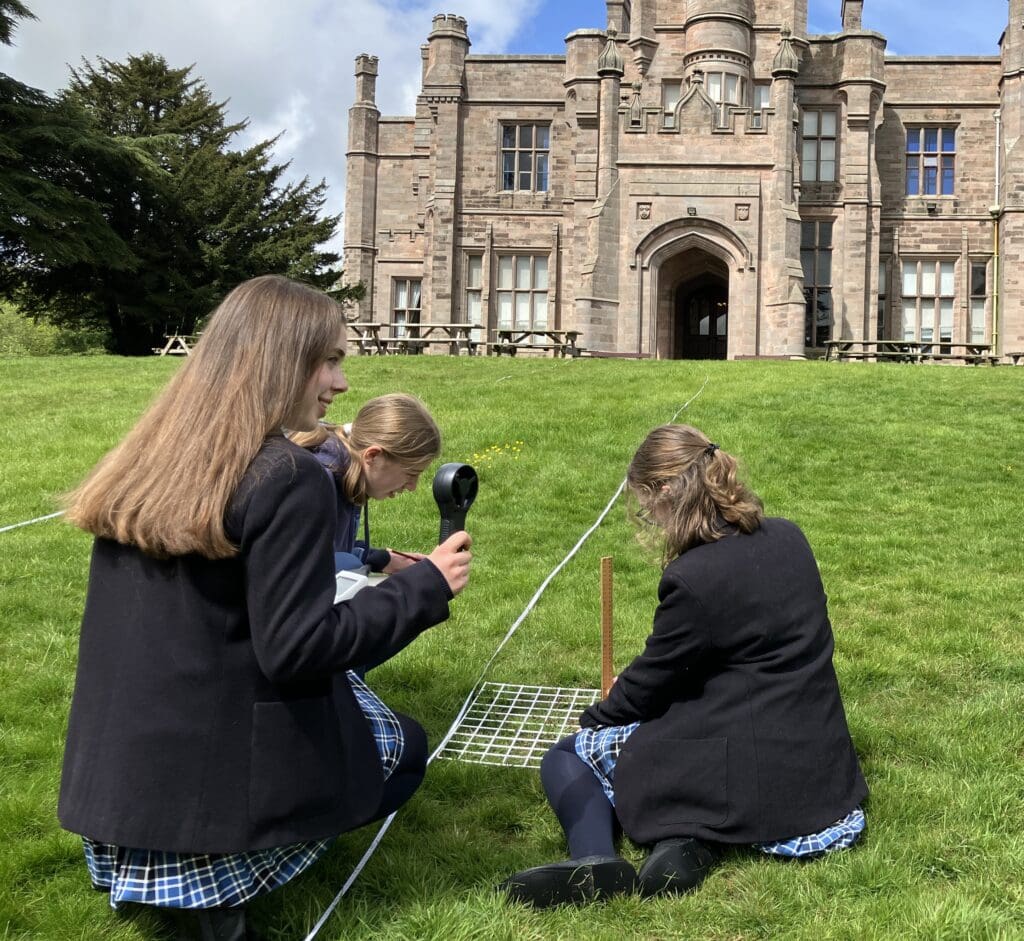
Teachers blend industry and education experience
Both physics teachers, Dr Hardy and Mr Woodrow, come from engineering backgrounds and had careers in industry before becoming teachers. The Longridge approach to sharing expertise across the curriculum means that they also teach outside of the department, in music, maths, or design and technology.
While it is often expected that maths teaching will find a home in physics lessons, Dr Hardy and Mr Woodrow enjoy bringing their broader expertise to the fore, especially when demonstrating physics effects using simple practical equipment. Anyone who attended Longridge’s recent open morning will have seen their ‘loudspeaker’ made from kitchen foil, a strong magnet and a signal generator.
Mr Woodrow added: “We are fortunate in where Longridge is situated, not only to be close to the Northumberland International Dark Sky Park, but also to sites such as Torness Nuclear Power Station.
“This has allowed us to encourage our pupils to expand their horizons and encourage an interest in astronomy and energy, while also keeping them grounded and well informed of local industries and employers where they may put their physics knowledge to good use.
“That is where we see the real value for pupils of connecting classroom science to the world around us.”
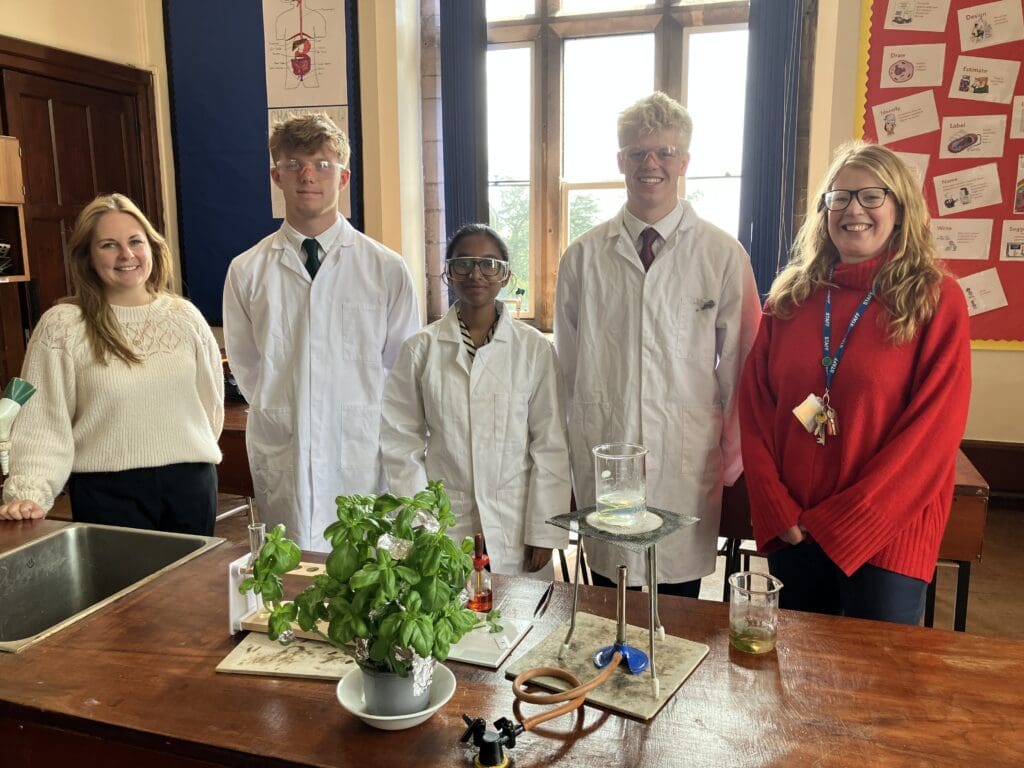
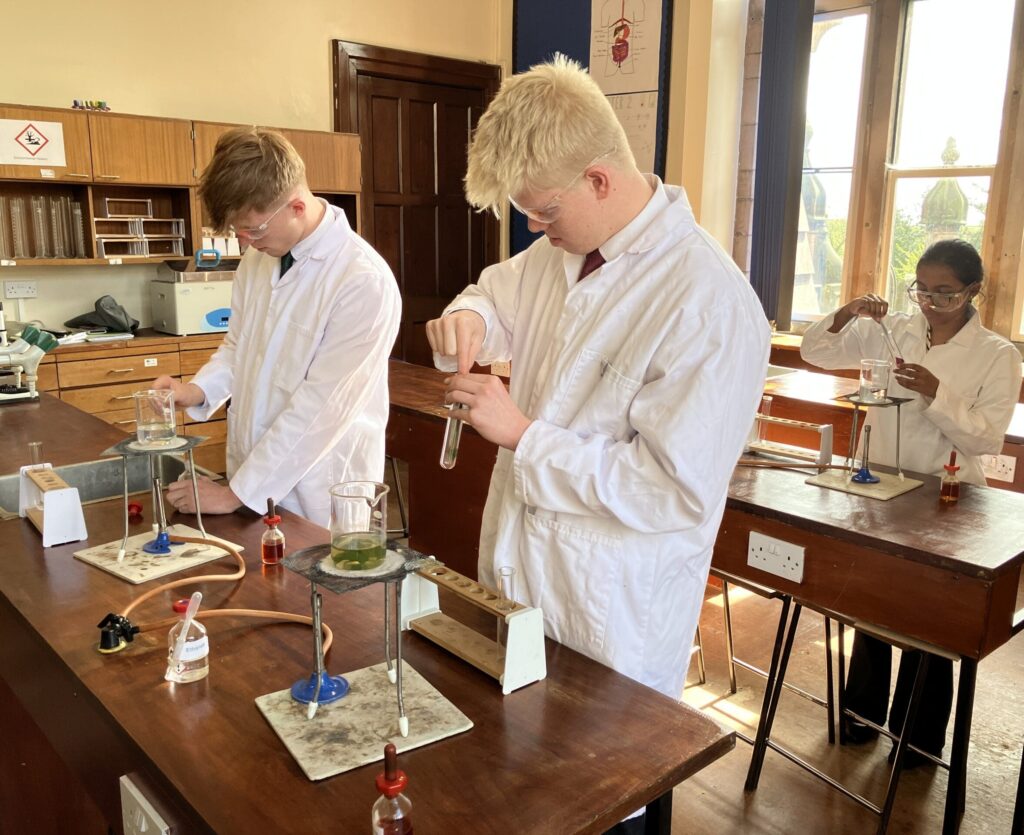
Ms McCalvey and Mrs Barber with students George, Mahi and Liam in a recent biology class.


Post / From aspirin to UK awards, scientists excel at Longridge
Share This Page