
Longridge goes back to its roots, literally
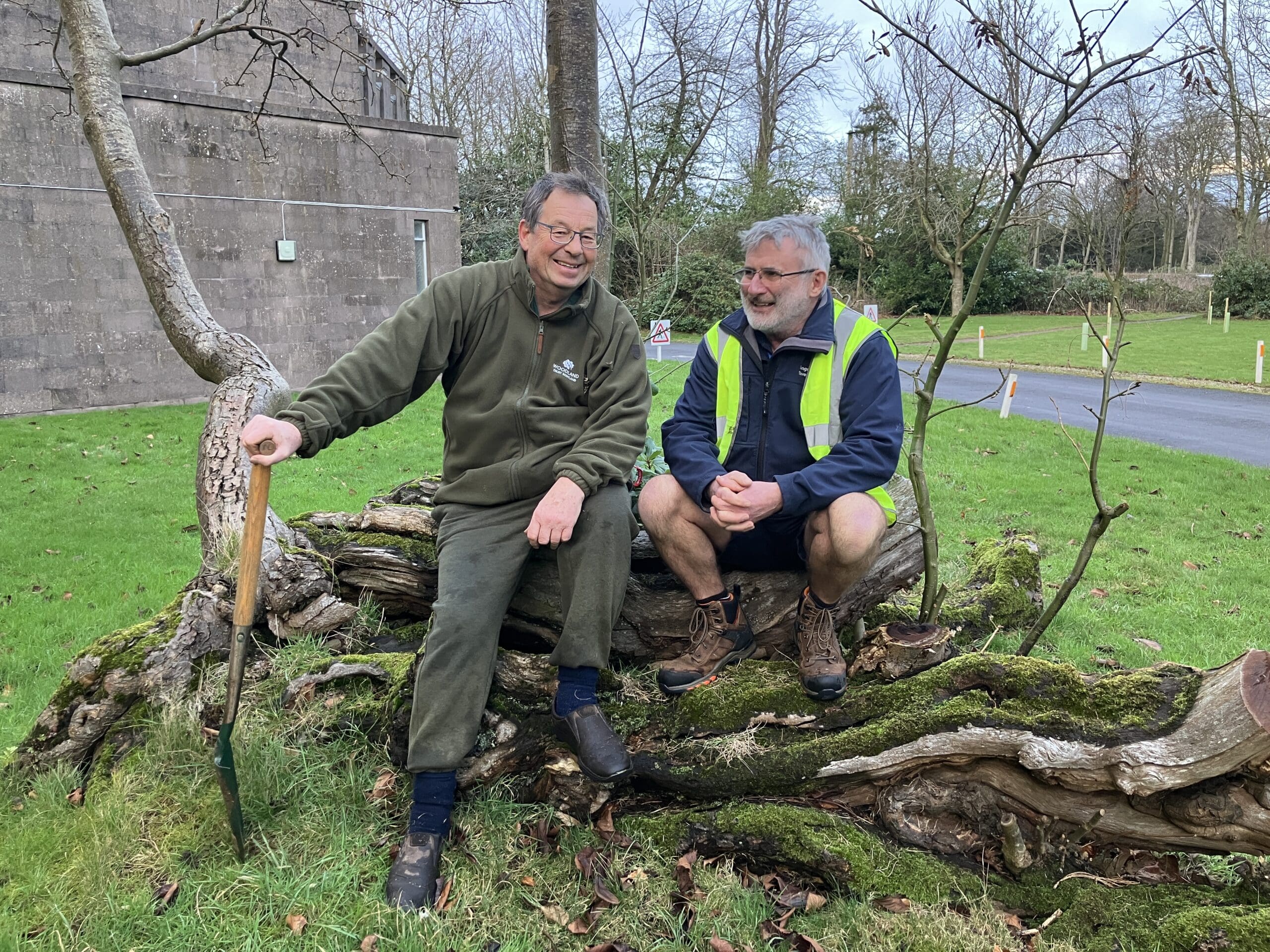
Iain Laidlaw from The Woodland Trust (left) and Longridge Site Manager Colin Smith take a break from planning tree planting.
Current pupils restore Longridge of old … for pupils of the future
Climate change and the environment comes under the spotlight at Longridge Towers School next week with pupils planting more than 300 trees as they seek to restore the grounds near Berwick-upon-Tweed to their former glory.
The history of the Longridge estate dates back to 1836. It was privately owned, with the central mansion built in the 1870s at a cost of £138,000 (around £20m in today’s money). It was sold in 1920 and a Miss Gordon-Smith ran the first Longridge Towers Schools, for girls, complete with a daily ‘charabanc’ service from Golden Square to the school, until just before World War Two.
Schooling moved to St Mary’s Convent in Berwick after the war, but, with so many pupils, they then moved to Longridge and remained there until 1983. It was then sold to a collective of parents and local farmers and landowners, and became the modern-day Longridge Towers that has welcomed many thousands of children from local towns and farms, and students from around the world.
In recent times, the landscape has been changed significantly by storm damage, the loss of trees across the grounds exposing large parts of the estate and removing wildlife habitats. Now, as part of the School’s Sustainability Week (2-6 February), The Woodland Trust – the UK’s largest woodland conservation charity – is coming in to help the staff and pupils re-plant in key areas.
Understanding how trees store carbon and protect environment
Iain Laidlaw, Operations and Carbon Manager at The Woodland Trust, explained why the project will play a significant role in improving Longridge’s sustainability and protecting the local environment.
“I’m really looking forward to working with the children on this project,” he said, “because it’s important that the youngsters start to understand the importance of trees, particularly in an area like this.
“Carbon is a key theme for us and we’ll explain to the children how as the trees grow, they suck carbon dioxide out of the atmosphere, lock it up in the timber and the roots and the branches, which plays a huge part in tackling climate change.
“But what we’re doing at Longridge is more than just about the carbon. The estate has changed in recent years with storms blowing down many trees and that has had an effect on the environment.
“So, we’ll be planting trees to provide homes for wildlife, for shelter and to ensure the beauty of the landscape for future generations too.”
Woodland Trust helps children ‘on the ground’
So, what are the benefits to The Woodland Trust of being in school working closely with the children and having a ‘Sustainability Week’, as opposed to simply providing 300-plus trees?
He said: “We have to get everybody more aware of the very real challenges of climate change, but it starts with the young ones, doesn’t it? Being in school and part of this week means that we can listen to them more closely, learn about what they understand about climate change and trees, and then help fills the gaps and encourage them in what they’re doing here.
“And, you never know, some might be inspired to be foresters who can have a say in how and when trees are planted or not in the future, and improving our environment and tackling climate change across the UK.”
The Longridge Towers site manager is Colin Smith, who is well known to many for his exploits in a rally car where trees pass by in a flash as he motors through forests up and down the UK. He is working closely with the Woodland Trust and revealed that a total of more than 800 trees will be planted across this year.
‘It’s a big project, but a very exciting one’
“It is a big project,” he acknowledged, “but a very exciting one for how it will change the appearance of Longridge and the land around here – and in many ways restore it to what it was many decades ago.
“Having Iain working with us is brilliant because he brings a different insight and huge experience to the project. We’ve been planting trees for about two years because of what we have lost to storms, but Iain has a better idea of where these should go, how we plant them and how we maximise the carbon benefit with beech and oak trees, for example, as well as how we bring wildlife back to Longridge too.
“We probably won’t be around to see how it all grows, of course, but when you look back at some pictures of Longridge of the past, there were great trees everywhere, and that’s what our pupils will help us create for the future.”


Post / Longridge goes back to its roots, literally
Share This Page