
‘Longridge pupils at centre of fashion momentum’
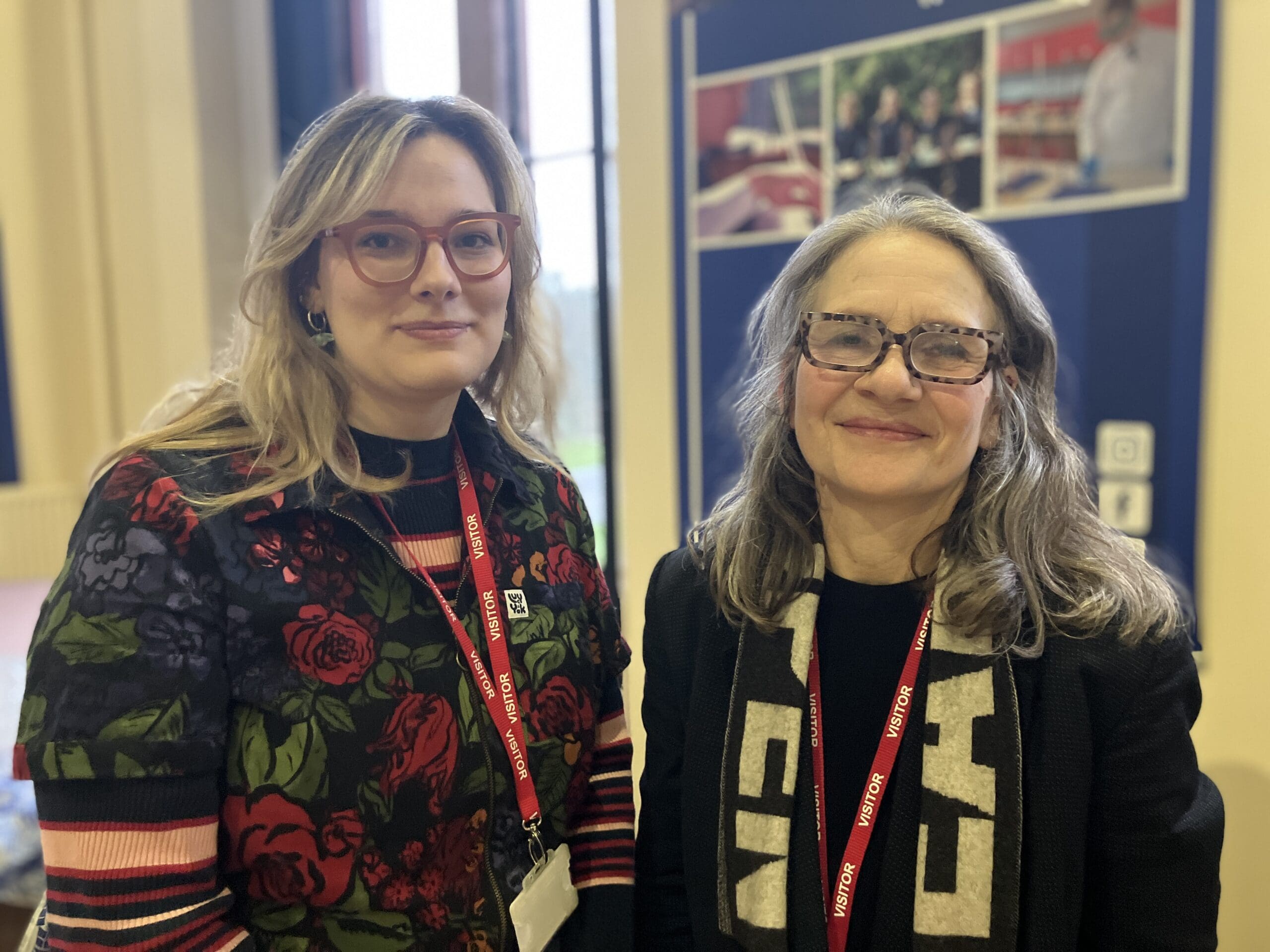
Emma Gall (left) and Dr Britta Kalkreuter, from Heriot-Watt University’s world renowned School of Textiles and Design, engaged pupils in their sustainable fashion research
A TALK on fashion this week started with the startling revelation that the fashion industry is now responsible for 10 percent of global carbon emissions – around double that of air traffic and sea tankers combined.
That certainly spiked the interest of many Longridge pupils as they were then invited to check their clothing labels and identify their origin by the latest speaker in Senior Open Week, themed around ‘Sustainability’.
Dr Britta Kalkreuter is a leading researcher on fashion and textiles, having worked at universities in Cologne, Dublin and Scotland. As Associate Professor and Associate Executive Dean at Heriot-Watt University’s world-famous School of Textiles and Design, she has worked “forever” in the textiles world, based in the Borders since 1999.
She said she was delighted to be able to meet with Longridge pupils, on ‘Non-Uniform Day’, which was created to coincide with her visit and allow pupils the chance to seek out and wear pre-loved and second-hand clothes to school … which proved a hit!
One pupil told us: “I wish we could do this every Thursday!”
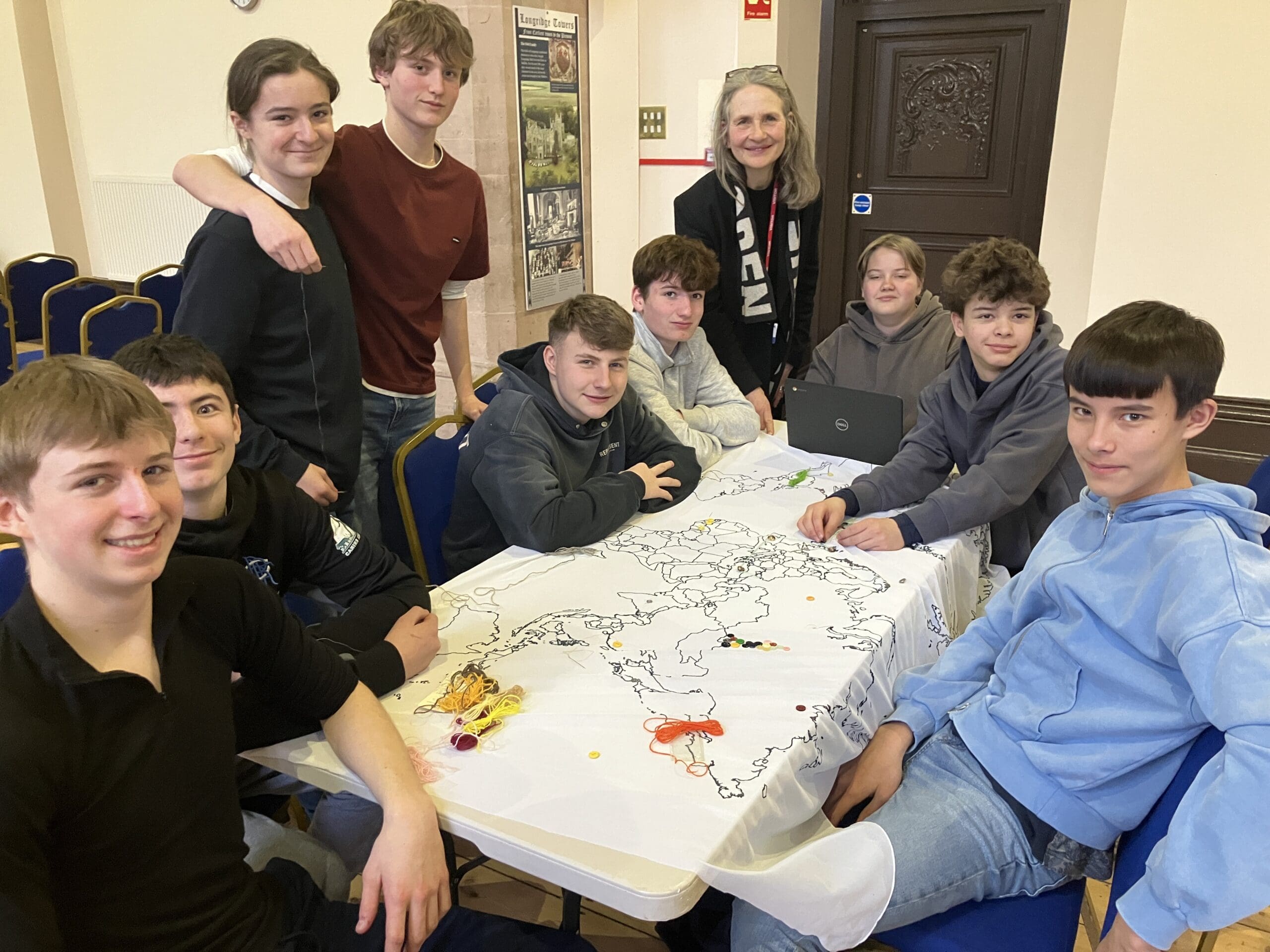
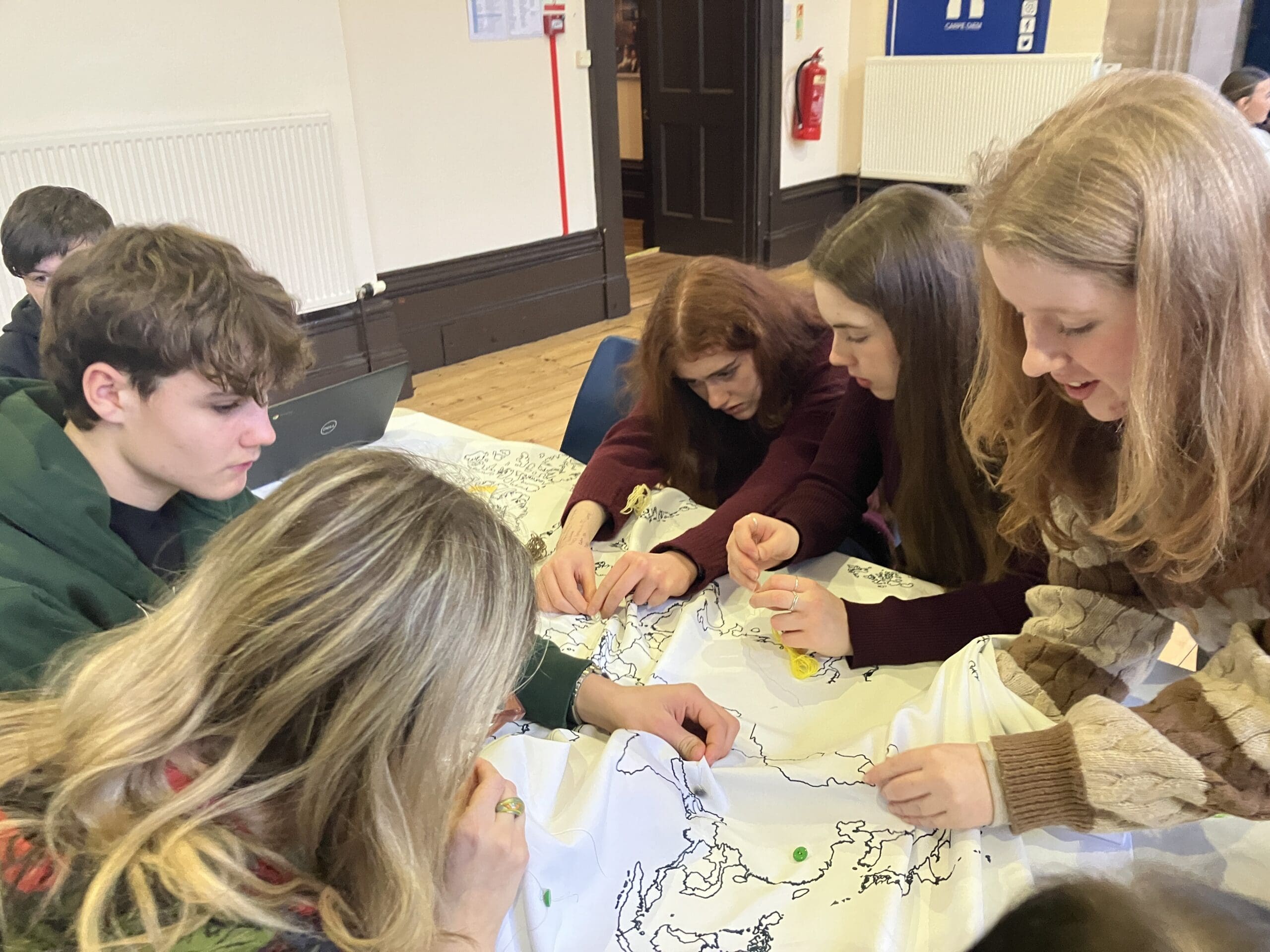
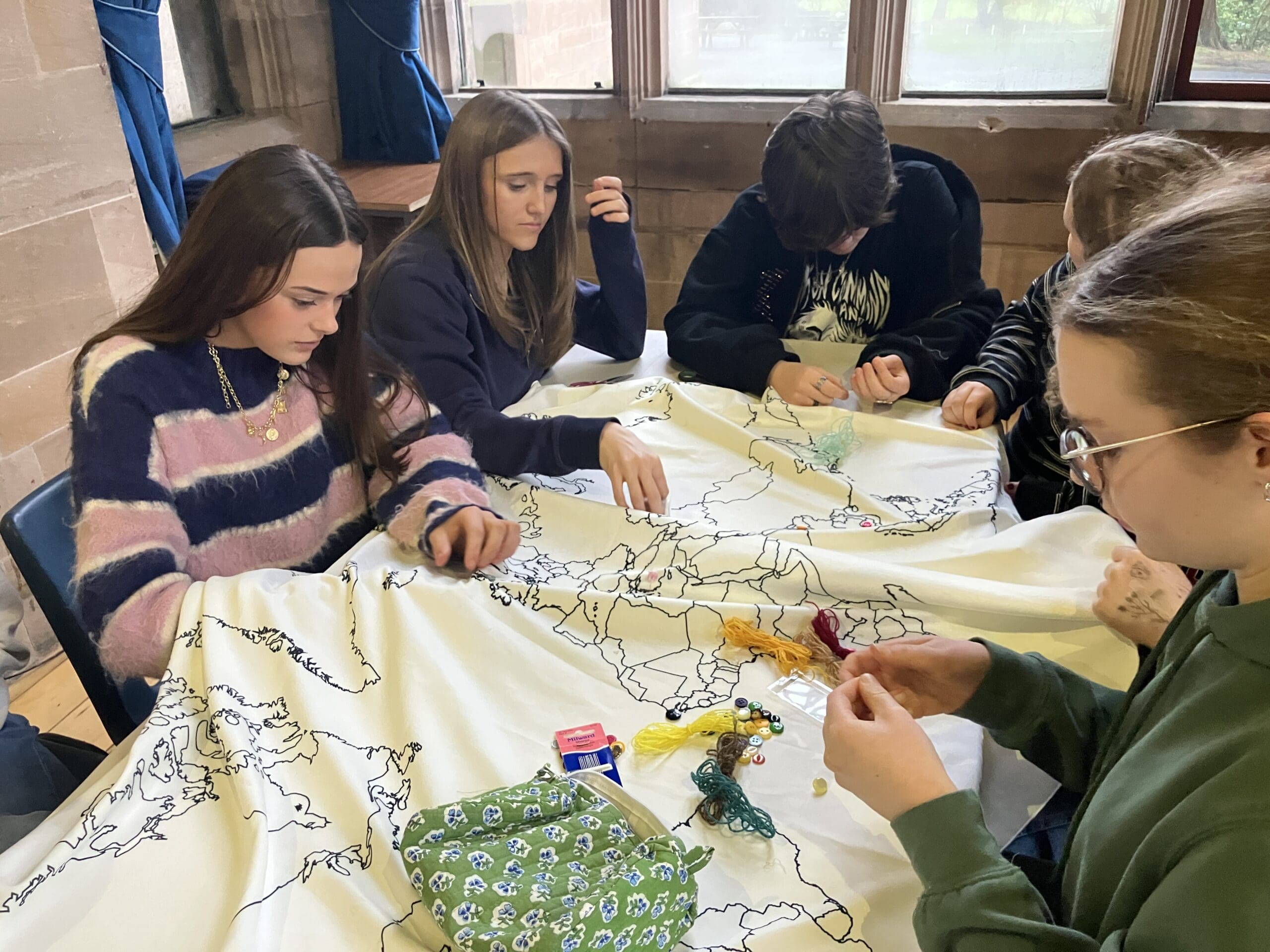
Longridge workshop informing research
Dr Kalkreuter told them: “This is part of wider research for us into the awareness around sustainability of fashion and textiles, which we know is low and has become lower in younger demographics, which is in itself a barrier to sustainable behaviour.
“So, it is important to get out and work with people and try to raise awareness of our own knowledge gaps and skills. Emma [Gall] hasn’t yet been able to conduct research with people as young as this so the School putting on a Sustainability Week, and actually putting sustainability high up on its agenda, is great for us, and has provided Emma with a great opportunity to work with a different demographic.”
Emma Gall is a Hungarian PhD student at Heriot-Watt, the university she has attended for six years and what she called “a magical place to study”. She accompanied Dr Kalkreuter at Longridge, leading an experiment to see how far clothes worn by Longridge students had travelled, and their fabric make-up. The exercise also tested their sewing skills as they sewed buttons on to a world map, and then stretched thread between them, to illustrate the distances their clothes had travelled.
At 26, she said she understood the challenges facing Longridge students as they grow as teenagers to understand and appreciate fashion.
“I have come through the same as these guys with the demands of fast fashion now,” she explained, “and clothes now being shipped across the world, so I understand what they are going through, and how little it actually matters to you as a teenager where the clothes have come from.
Changing our relationship with clothes
“And that’s why I think it’s really important to be introduced to this from a young age, to learn about the impact fashion has on the world we live in, but also to learn that there is hope, that we as a younger generation can change what is happening. We have spoken today really about changing our relationship with our clothes, and developing a deeper understanding of what we wear, who’s involved in making our clothes, where it comes from, and the impact that our choices have.
“I have wanted to be a textile designer since I was four years old, actually, but the last few years at university have introduced me to a new world of creating, designing and selling clothes in a sustainability context.
“The Scottish Borders is an amazing place for us because it has always been at the centre of textiles, and we still have lot of creativity and skills here, so it’s a good place for children to learn.
“There is a lot of concern about what has happened, but I think we’re in a time of a changing momentum in fashion and these children are right at the centre. I love being part of shaping young minds and introducing them to this world that is so exciting, and I’m grateful to Longridge and Britta for giving me this opportunity.
“I’m hopeful that some of these young people will work with us in the future to help create a more sustainable fashion and textiles industry, and a better world.”
Students say they will think twice about where to buy clothes
Several Senior students told us what they would take away from the session. Charlie said: “My mum used to work in fashion and I found some of those stats very interesting – quite eye-opening really. I think I’ll try and wear my clothes a bit longer now, more to the end of their lives.”
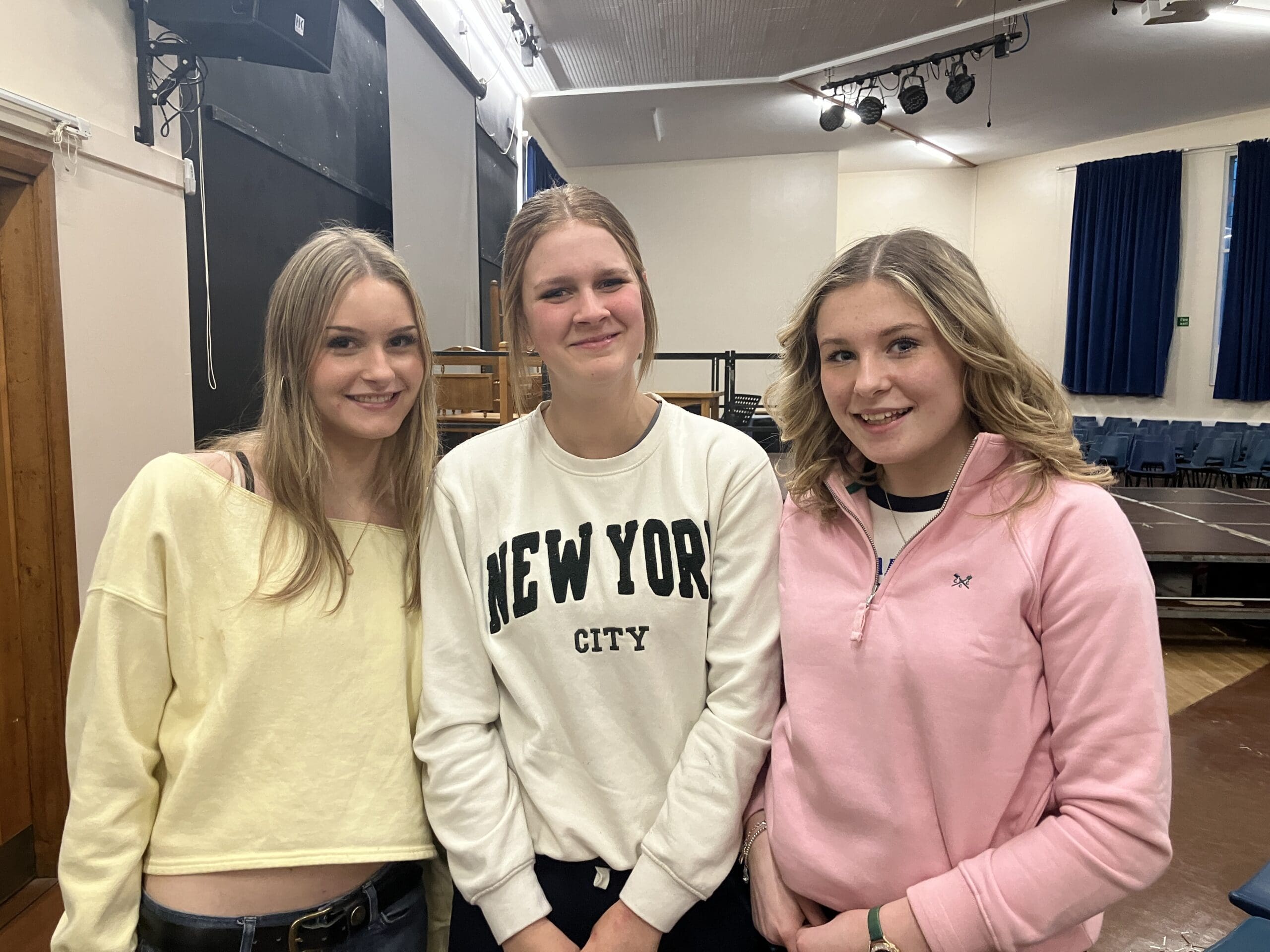
Charlie, Darcy and Verity say using ‘Vinted’ is now uppermost in their minds
Darcy said: “It was interesting to think about where your products are made, and the type of materials that are used that we just take for granted.
“I will definitely think a bit more when I’m buying clothes about where it has travelled from and the carbon footprint that that jumper or pair of trousers has left.
“I don’t know if it will stop me buying something, but I’ll definitely think about it more now. I don’t think we tend to care about where clothes are from when we’re buying something, so I think we need to change that, and have more interest in our clothes.
“Today has given me motivation to think a bit more about clothes and fashion, and try not to take clothes and where they come from for granted.”
Verity added: “It puts things into perspective. When we think about sustainability and polluting the earth, we tend to think about cars and planes, when actually we’ve learned today that fashion, and where we get our clothes from, is hugely damaging to the planet.
“I was interested to hear about what we could do to change that. I have started using ‘Vinted’, and I’m going to do that more.
“I understand better now about how if we – me and my family and friends – can sell clothes we don’t wear or don’t like, and go into Vinted more for our clothes, then it will have a huge impact on reducing the demand and the carbon emissions.”
Dr Kalkreuter closed her and Emma’s talk by sharing a quote from the late fashion icon Iris Apfel (below), and explaining how trends by their very nature change regularly, and why following them without thinking about how you feel is not good for you, or the planet.



Post / ‘Longridge pupils at centre of fashion momentum’
Share This Page