
Community is the key to Longridge success
GOVERNOR SERIES
The sight of a Longridge Towers school bus turning off the main road and passing the farm each morning is, for David Armstrong, a reminder of just how far his family’s connection to the school runs – long before he ever thought about becoming a school governor.
The Armstrongs have farmed the land around Longridge Towers for close to a century, and David’s father helped shape the school in its earliest days, decades before he joined the board. David’s wife Lucy was a Longridge pupil for six years and School Captain in her final year, and their son enjoyed his Longridge schooldays from ‘Tower Tots’ early years, and it was that deep, generational tie to the school – as much as the farming background – that drew David to volunteering to be a governor in 2024.
Lucy’s support for the school continued with the Longridge Towers School Development Association (LTSDA), where she served as its Chair. Through her time as a pupil, parent and Chair of the LTSDA, she has maintained a strong and lasting commitment to the school and its community.
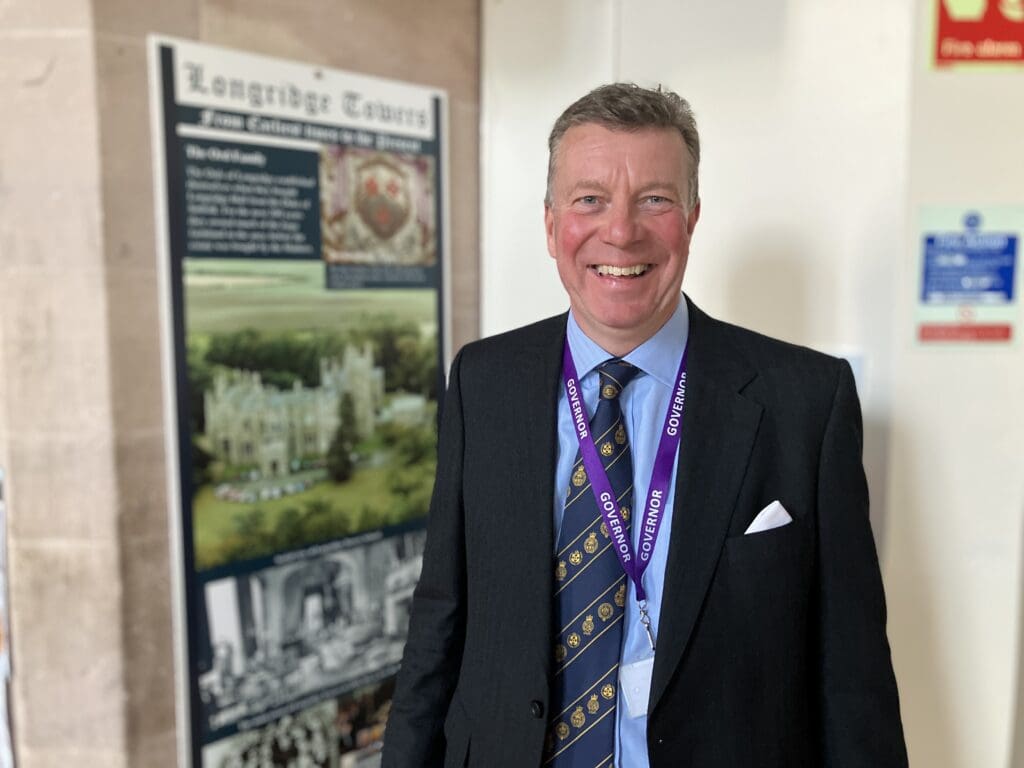
David explained: “You could say very definitely that Longridge is a big part of our family, which is why we understand its value to the local area.
“I see my role as a governor very much on the practical and logistical side of the business. Obviously, there are areas where I have experience as a local farmer and businessman, such as in finance, and land and estate management, but it all comes really from a love for the school, this area, and that big, impressive building really, which is a tremendous, beautiful building.”
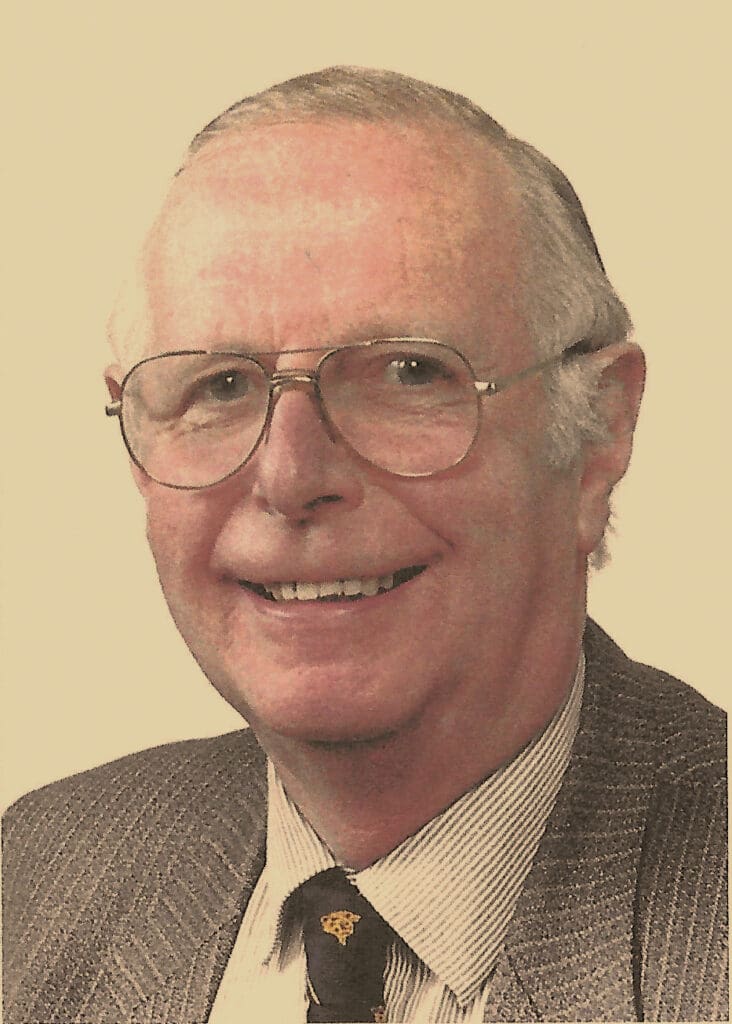
David’s history with Longridge stretches back to when the imposing Grade I listed building was still a family home, and then a convent. His late father was closely involved through the transition to a school, when asked by James Stobo (pictured) to become a trustee as Longridge Towers School was first established in 1984.
“My father declined originally because he was one of several local farmers helping them develop the school by buying some of the land at the front,” David explained. “As a farming family, we bought 75 acres along the front of the school, other local farmers and developers bought other parts, and that helped provide some capital for the school to get started.”
That early support helped the fledgling school open with a roll of around 80 pupils under founding headmaster Michael Barron. Some farmers would later sell the land back to Longridge Towers to help it develop its campus and increase its sports pitches, and more development is under consideration as the school roll now sits at over 260 with capacity to grow further.
It was that same hands-on spirit that saw David step in when Storm Arwen tore through the country in November 2021, blowing over more than 100 trees in the Longridge grounds and leaving areas badly damaged. He organised a team of farmers and parents, forklifts and chainsaws included, to clear up and help get the school back on its feet within the week – most of the team being parents, he laughed, desperate to see life at Longridge return to normal and their children back in school.
“I think Longridge is unique,” he said. “We’re so lucky in this area that we’ve got a school of that stature and a strong community around it.
“To get any other private education, you’re into the big schools in Edinburgh or Newcastle, which are a lot more expensive, mean a lot of travel or more expense for boarding, and that also brings a disconnection for young people from this area, and the future of the Borders and Northumberland economy and communities is also important to me.”
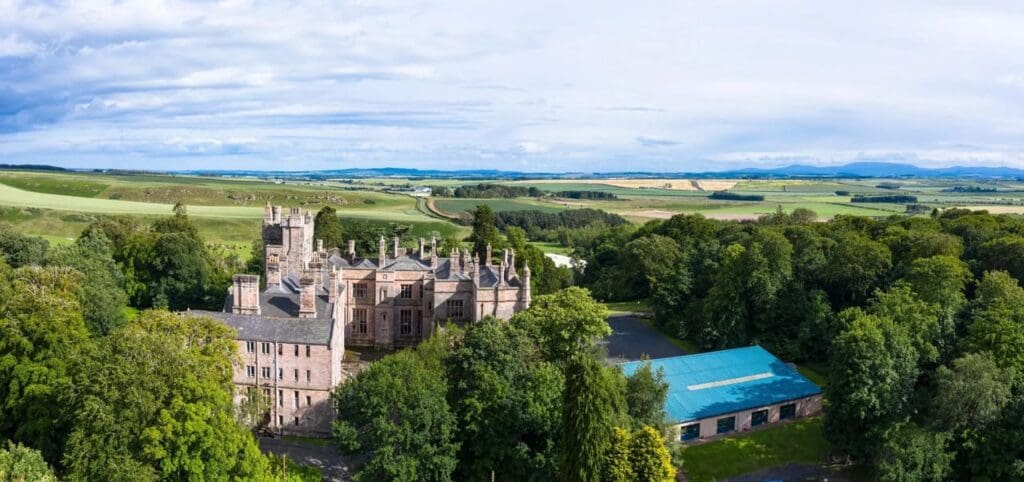
Safe, country school backed by strong community
As a parent of former students, himself, David also feels Longridge offers parents a reassuring safety for their children against the pressures of the modern world.
“It might just be me, but I always liked knowing the children were in a safe school all day, not able to go into towns or cities at lunchtimes – or other times!
“We all know the challenges in cities these days, with the growth of crime and drugs, and children being targeted at increasingly young ages. Thankfully, that’s not a worry for us in our more rural location. Of course, we are right beside the main east coast train line and our families are frequent travellers to the cities – some live there too – so we’re not far from it, but from a school perspective I like the fact that our children are in a very safe, almost gated community.
“At the same time, it’s important that they’re not detached from the real world. The staff put a lot of time and thought into giving the pupils opportunities to spend time in cities with regular trips there under many different parts of the curriculum, and they go to cities around Europe and elsewhere in the world. I like that unique balance we have at Longridge.
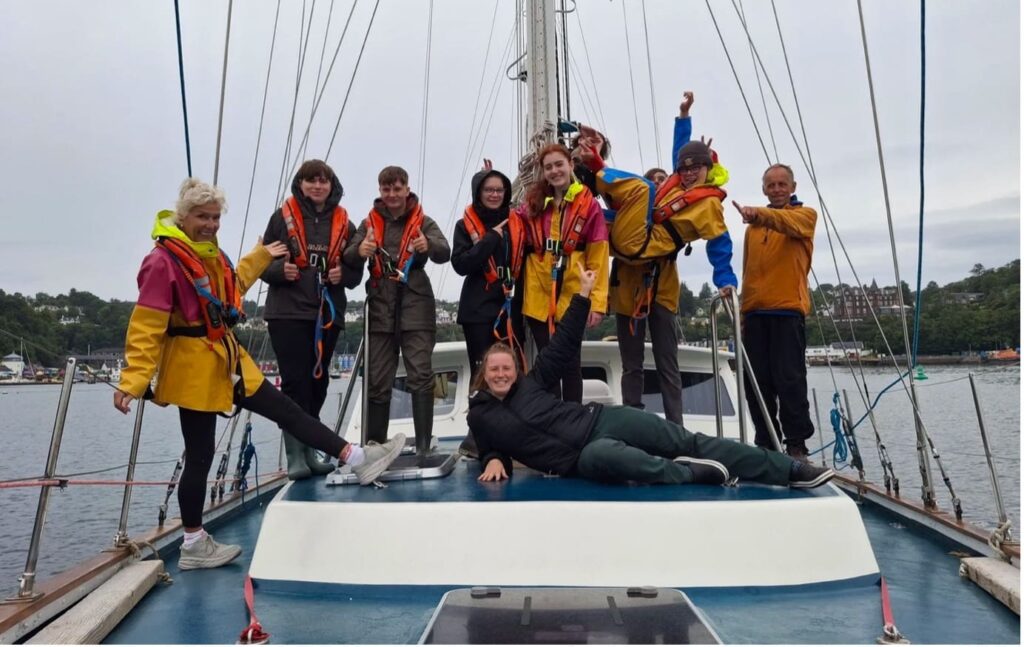
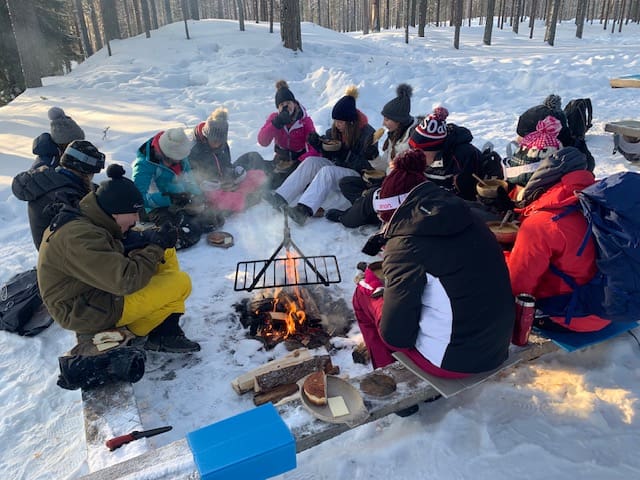
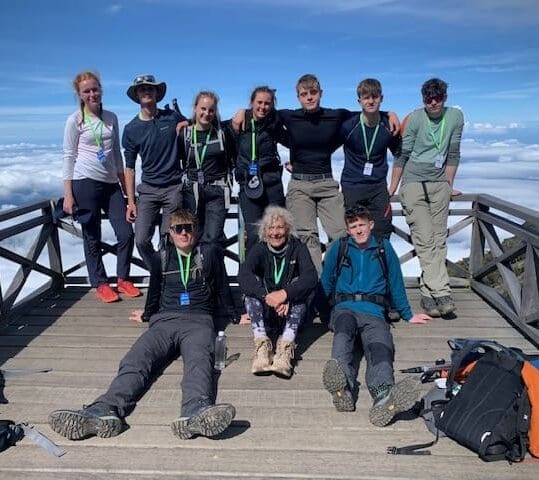
“The children are able to grow in a safe environment here, get the benefits of outdoor learning with Forest School, beach classes, spending time on local farms, but also think and feel global, whether that’s the recent one to the Western Isles monitoring whales and dolphins, to Edinburgh, Glasgow, Newcastle, London, as they did in the last term, or to Botswana where the Seniors are heading next year.
Boarding offering chance for older children to gain independence
“Growing up and gaining independence is so important for our young people and that is another area where Longridge comes into its own. Boarding provides children of any background – whether they are local, come from cities or come here from around the world – to start to learn about living on their own and looking after themselves, especially as they get into Sixth Form, preparing them for the move to college or university, or for work.
“I hear some people saying boarding is a thing of the past, but we’re actually now seeing more pupils wanting to spend nights here from time to time on ‘flexi-boarding’, as they like spending time with their classmates, but also because they want a bit more independence. It’s a privilege for us to be able to offer that in the safe environment we have at Longridge.”
Growing bus fleet helping more children come to Longridge
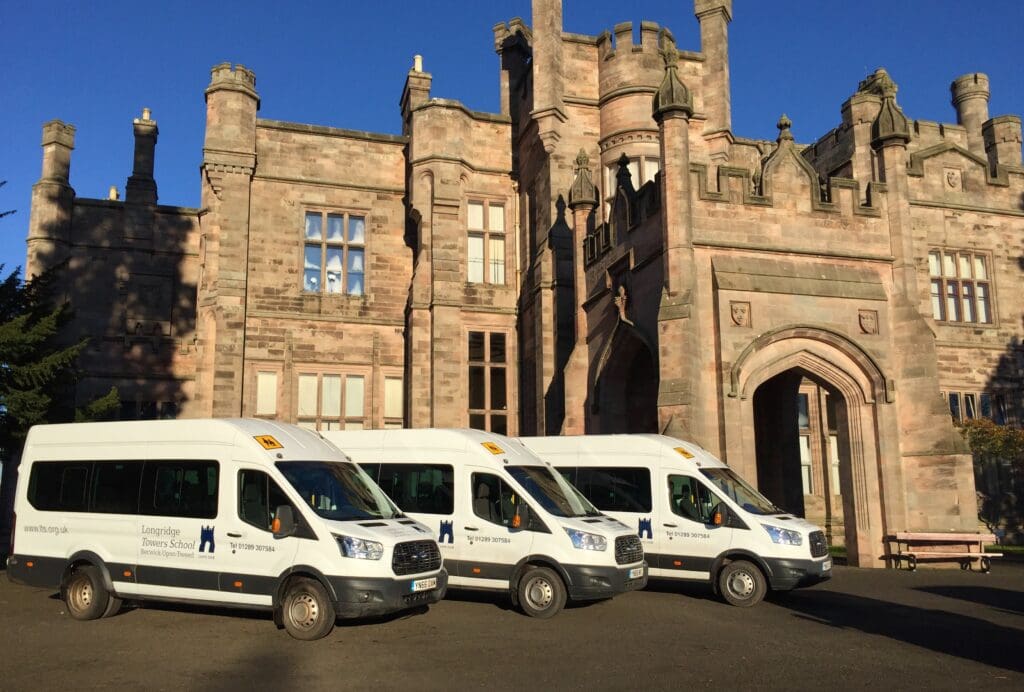
He points, too, to the school’s fleet of minibuses, now up to 16, that set out each morning for towns from Alnmouth to Dunbar, and inland to St Boswells – as a genuine door-to-door service that has brought families to Longridge from across Northumberland, the Borders and East Lothian who might otherwise never have considered it.
A number of families from parts of East Lothian have enrolled their young children at Longridge in recent years rather than send them on a bus or train into Edinburgh each day, when they found out the Longridge bus was willing to divert to come by their door.
David accepts there is a popular myth that smaller schools like Longridge cannot match either the academic and sporting quality or offering of the big city schools – something he is keen to address.
“We are a rural school, with something like 40% of the children from a rural, farming-based background, so, yes, we have developed different parts of the curriculum, like the BTEC educational qualifications in agriculture and business, to be relevant to families in the south of Scotland and north of England,” he said.
“But at the same time we have very strong English, Maths, Science, Languages, Music, Arts and Humanities departments right from Early Years to A Level, with highly qualified teachers. Our students’ performances in this year’s UK Science Olympiads and Maths events were incredible, and our best yet, and that has also helped them with their entries to universities across the country.
“But we also have children here who are developing in the performing arts across the world – in fact, one of our students in July became the youngster Advanced dancer in her style in the world, after winning a competition in the USA – and we have great musicians winning international awards, and that rounded education is key for us to enable all of our students to find and make the most of their ability.


“In sport, we all watched former pupil Oscar Onley finish fourth in last year’s Tour de France and competing strongly in the recent La Vuelta, and we have people doing amazing things in swimming, athletics, equestrian, rowing … the list goes on.
“But the important point is that if you spoke to them and to Oscar, they will tell you that they were encouraged, supported and given the chance to develop at Longridge, in partnership with local sport clubs. Yes, they were given high standards to reach academically, but they were also given space to grow, to be themselves and to develop their other interests.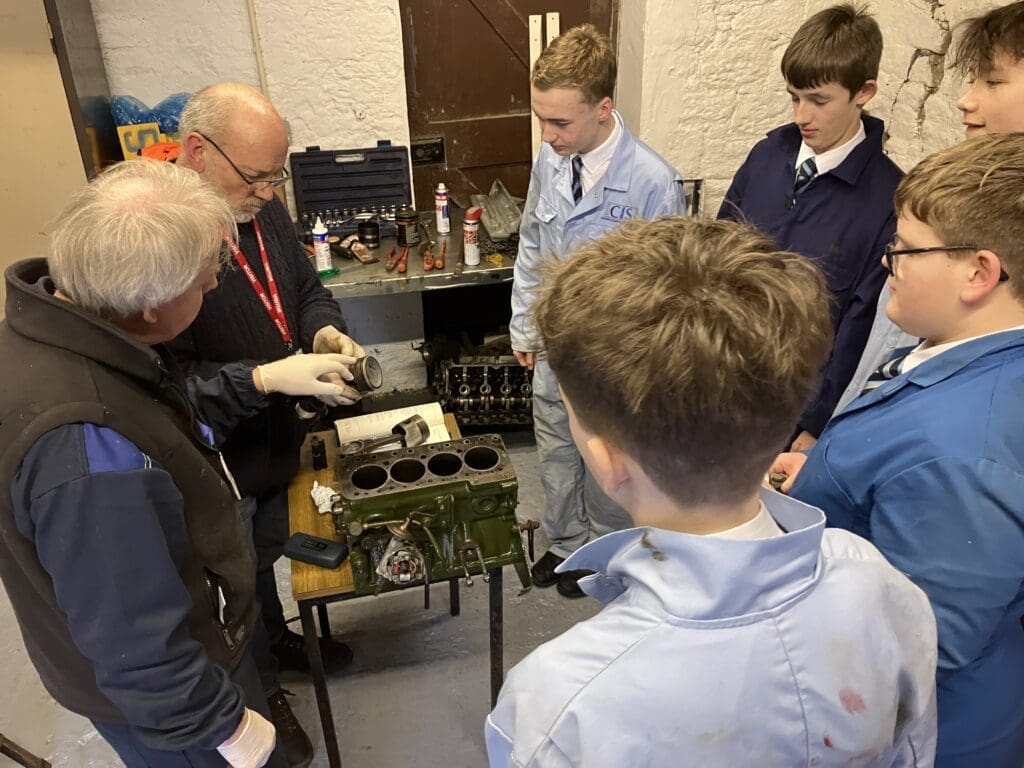
“For me, that’s always been the big attraction of Longridge. We are not a selective school, so we open the doors to children of all abilities because every child has ability, and our staff support and nurture them to be the best they can be.
“We also had a lad this year who has now gone to work with a leading historic car manufacturer in the south of England, right in among the F1 car bases and other sports car manufacturers, and he developed his love and skills in that area from one of the many ‘Enrichment’ clubs Longridge pupils attend (Car Club pictured) after school.
“We have youngsters who have gone into farming and are already running their own farms, and we have alumni who are working in the law, teaching, medicine and leading areas of science. And we are delighted for them all, but education can’t be about squeezing children into one funnel where they all come out the same; it has to be about giving them the support they need but also the space in a safe community to grow, learn and develop into who they want to be. For me, that’s what Longridge is about.”
Providing a middle option between state and expensive private education
On the wider picture, David acknowledges that demand for independent education has softened in places, partly reflecting an ageing population but also tougher economic times. He believes Longridge Towers occupies an important middle ground between state education and the far higher fees charged by schools in Edinburgh and Newcastle.
“The thing with choosing the right education for your child is that you can only do it once; you can’t turn the clock back. A private school won’t work for everyone, but the Longridge fees are a good halfway point – they are actually a third of the fees at Edinburgh schools – but the educational results compares with the top schools in Scotland and England.
“We have teachers and parents here who have worked in the big independent schools and they tell us that; they bring their children here because they value the difference, both financially but also in the smaller class sizes, less stressful environments, and everything around the curriculum like the outdoor learning and trips that help children to grow and develop their confidence and independence.”
Exciting chapter begins under new headteacher
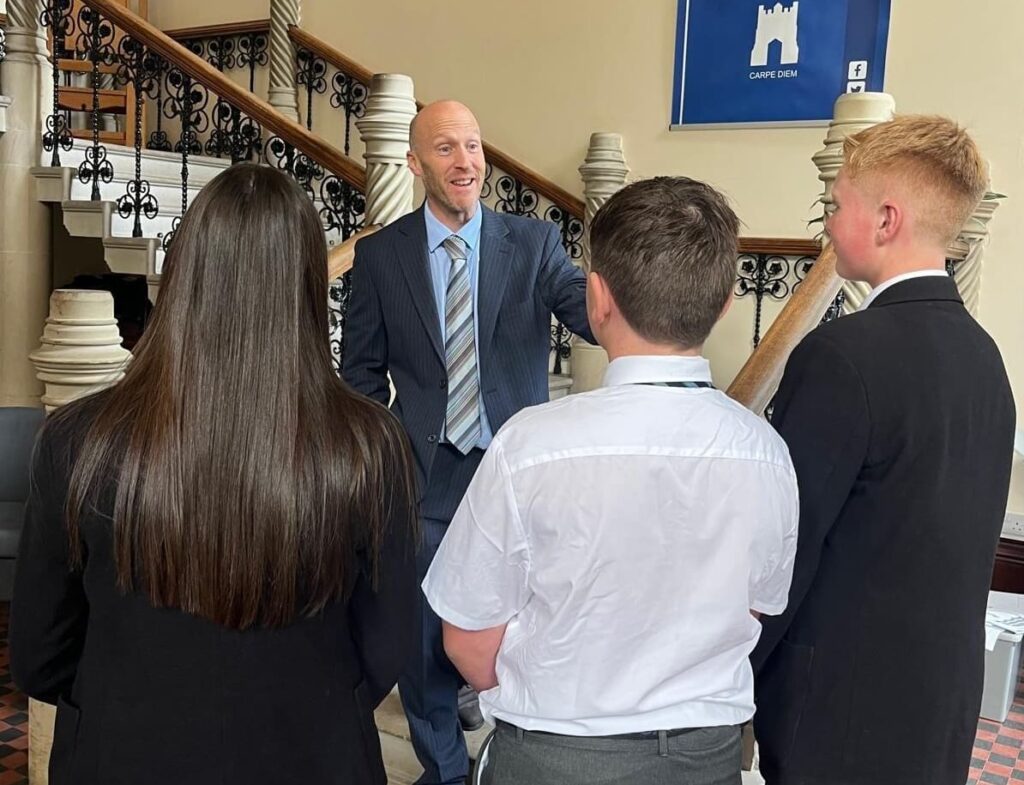
Looking ahead, David believes a new headteacher, Jon Wilcox (pictured), offers an opportunity for the school to start a new chapter, and is keen for new governors to help shape that too.
“It is an exciting time for us and I’m really looking forward to what the next few years are going to bring with a new Headteacher and several new staff in place who are full of energy and ideas,” he added.
“Jon [Wilcox] has done very well in Australia, where his old school was also a rural school, that more than doubled in size, and we have similar aims now for Longridge.
“We have said goodbye to some wonderful governors over the past year or two and so we’re looking for new people to get involved and help us drive that next chapter, and I’m looking forward to helping bring in new faces with different skillsets.
“We’ve got this lovely, safe environment, we’re getting extremely good results and pupils are going to what they now call ‘positive destinations’, which is great to see, but I don’t think we’ve been very good at getting out there and shouting about our school. It’s time we changed that.”

Post / Community is the key to Longridge success
Share This Page