
Longridge proves a UK outlier in bucking musical trend
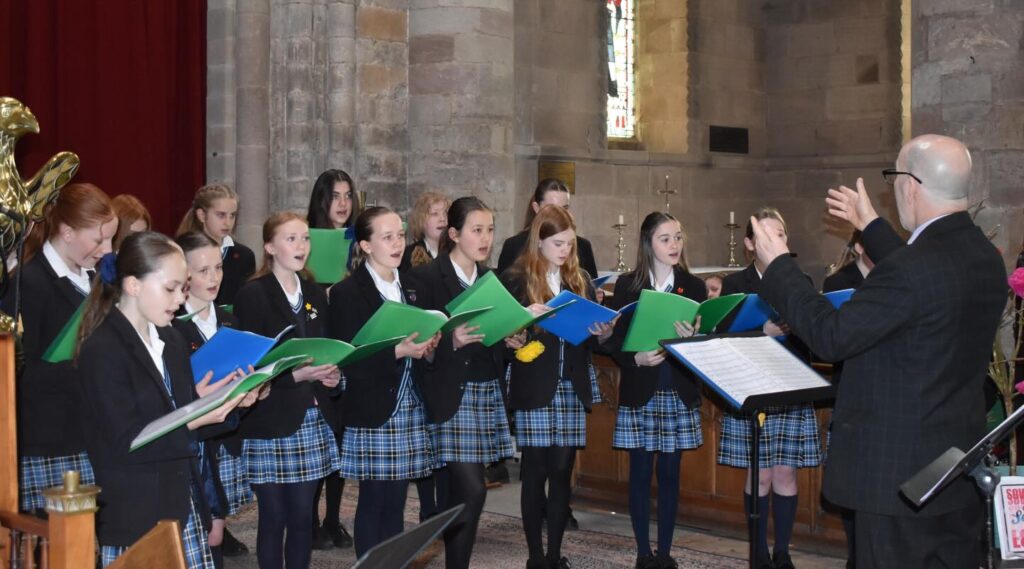
The teaching of music in education has been in decline across the UK in the past decade, but not at outlier Longridge Towers School where it continues to be on the rise.
Led by two Cambridge University graduates in Dr Michael Hardy and Hannah Humphreys, with enthusiastic support from peripatetic teachers, the music department at Longridge is becoming well known across independent schools.
He explained: “Music is something you can do for your whole life, whether it is competitively, as a career, for fun with family or in bands and musicals. Learning to master an instrument and then contributing to something much bigger than yourself is really quite powerful, and it stays with you.
“The central focus for us at Longridge is to help all children discover their potential and, for me, that means encouraging and supporting them to get to that point in music where they become confident and appreciate the joy they can experience and bring to others.”
Decline in music leading to children dropping out
According to recent research, music education in UK schools is continuing to witness a long-term decline in uptake at GCSE and A-Level, with entries having fallen 36-45% since 2010 due to budget constraints and academic prioritisation of other subjects. Music in general across both state and independent schools is experiencing a significant level of drop-out in students aged 12 years on, and particularly among boys.
Efforts are being made to change that picture with the UK Government having pledged to invest £79m in ‘Music Hubs’ to improve music tuition, and the Scottish Government offering similar pledges, but without funding to support it. And still the numbers are falling – except at Longridge Towers School, where they are going up.
It is something of a mission for Dr Hardy and the music teachers at Longridge, who are not holding back in their development of opportunities for the next generation. Originally from Rochdale, Dr Hardy attended the Royal Northern College of Music in Manchester at the age of 13 before going on to Cambridge, where he studied Engineering, and played with the Cambridge Symphony Orchestra and Cambridge Light Orchestra.
When he moved north of the border to become a lecturer at the University of Edinburgh, his music came with him and he would compose and arrange music for the Edinburgh Light Orchestra, as well as continue to blow his own trumpet with his Big Band and Brass Quintet in Edinburgh.
For Dr Hardy, music is about opening doors to personal development, resilience and excitement, and so all children are encouraged at Longridge to take part in assembly singing, choirs and ensembles, as well as musical shows and in-school and community performances.
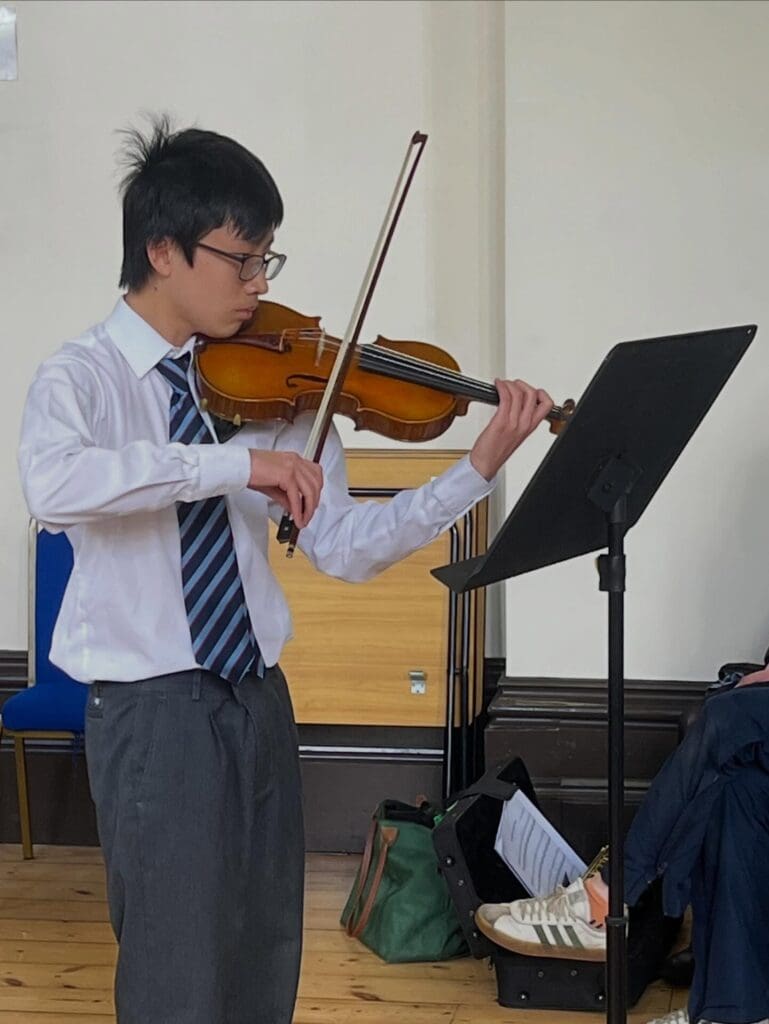
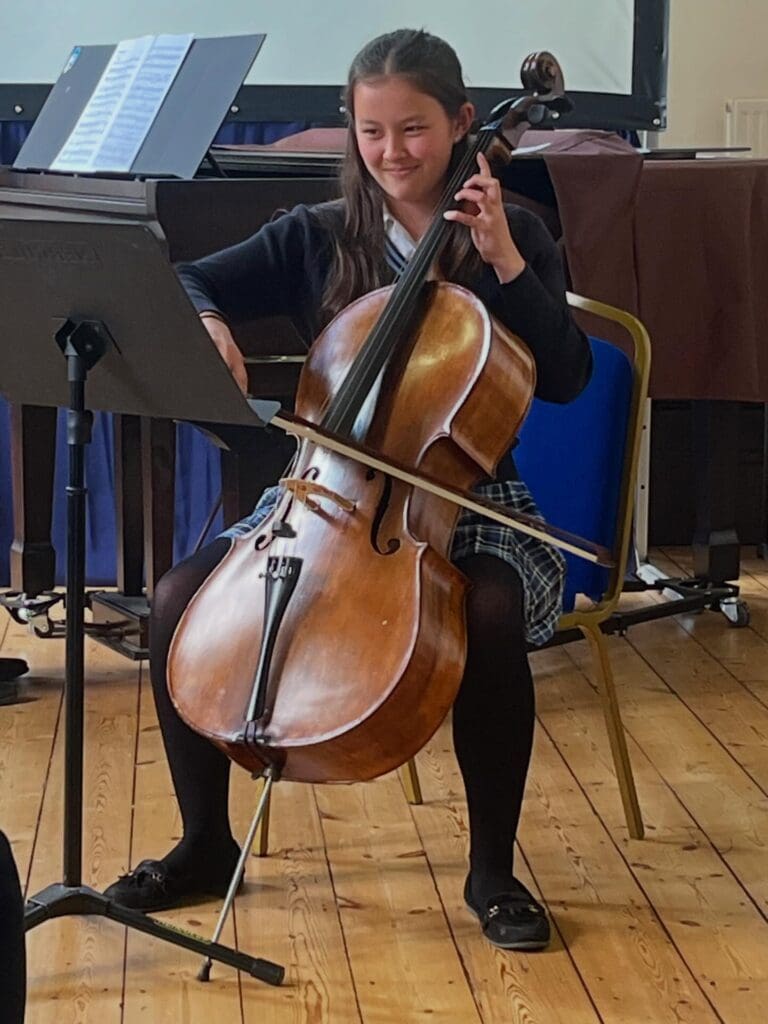
At the same time the school is supported by a team of music tutors several days a week across a range of instruments, which makes use of the Meadow House music rooms along the school drive.
“One of the strongest points of Longridge’s music is definitely our peripatetic system and the work that goes on at Meadow House,” said Dr Hardy. “We have a very strong team of peripatetic teachers who encourage the pupils to develop and push themselves to achieve their potential and often reach a level of musical ability that the pupils didn’t know was possible.
“A large proportion of the school have singing or instrumental lessons, and because of that, an independent examiner actually comes to us. Our success rate at the external associated board exams are extraordinary. The number of merits and distinctions we receive, as opposed to straight passes, is just tremendous, and we’re all very proud of that.
“But we are also fortunate because we have a great community of pupils, parents and wider families and friends that enjoy and see the value in learning music, and so there is a lot of encouragement for pupils to practise and persevere when it is difficult. That is very important.”
‘Why would you not sing? It energises you!’
Mrs Humphreys is regularly spotted dancing around school and leading singing – unsurprisingly, perhaps, as she has a first class music degree majoring in performance – and when asked why singing was important, she replied: “Why would you not sing?
“Singing is fabulous for the soul; it wakens you up in the morning; it energises you and gets you ready for your day. Singing also lowers cortisol [known as the body’s primary ‘stress hormone’] and unites us as a social group.
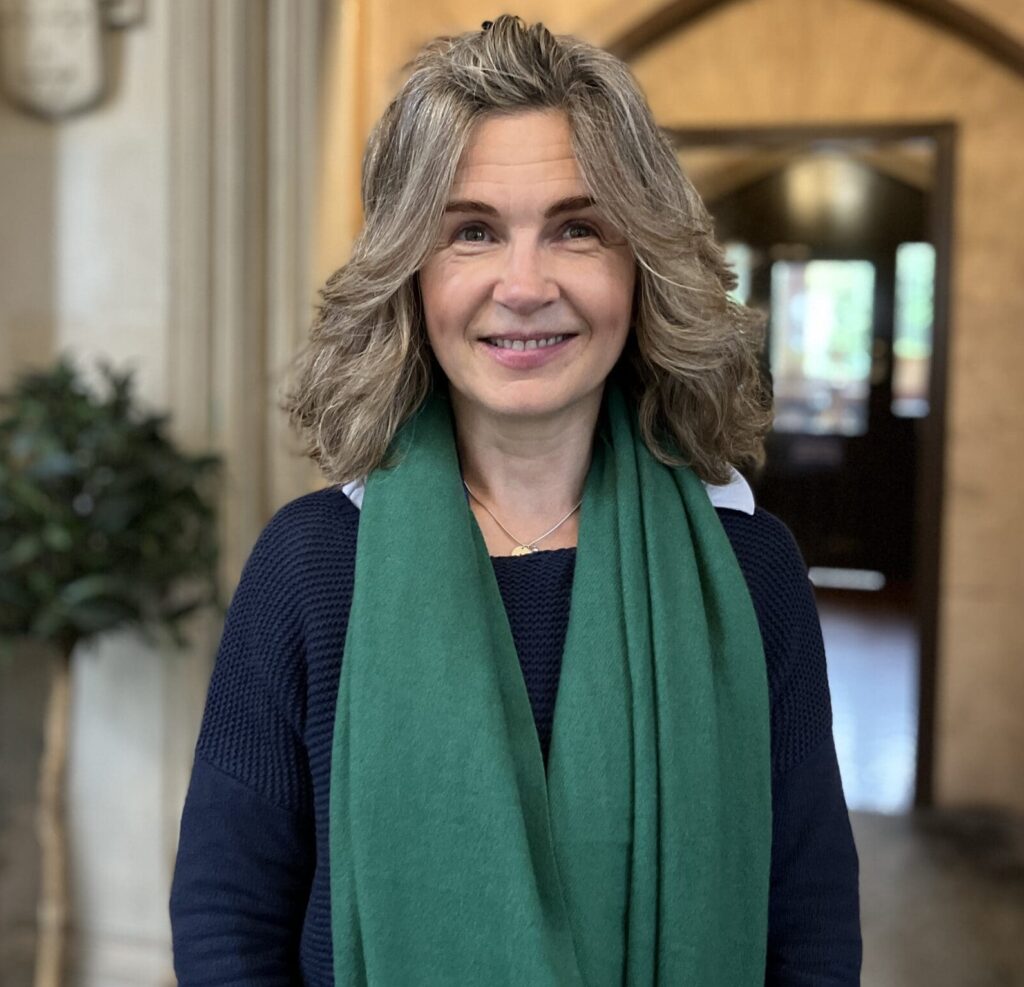
“I feel it is really important that all children are given the chance to sing and learn to sing in a friendly, encouraging environment. We have a great mix of children with a variety of skills and strengths, and the Longridge ethos is about enabling every single pupil to excel. We are not a selective school and music helps us to engage all our pupils and find their talents.
“We have an annual house music competition and the energy in this event is phenomenal. It is brilliant to see the sense of teamwork, healthy competition and pride in staff and students after achieving something unique together.
“Staff comment on how singing and that regular expression of personality can filter into their school life, and life outside school, in building self-belief and improving academic attainment.”
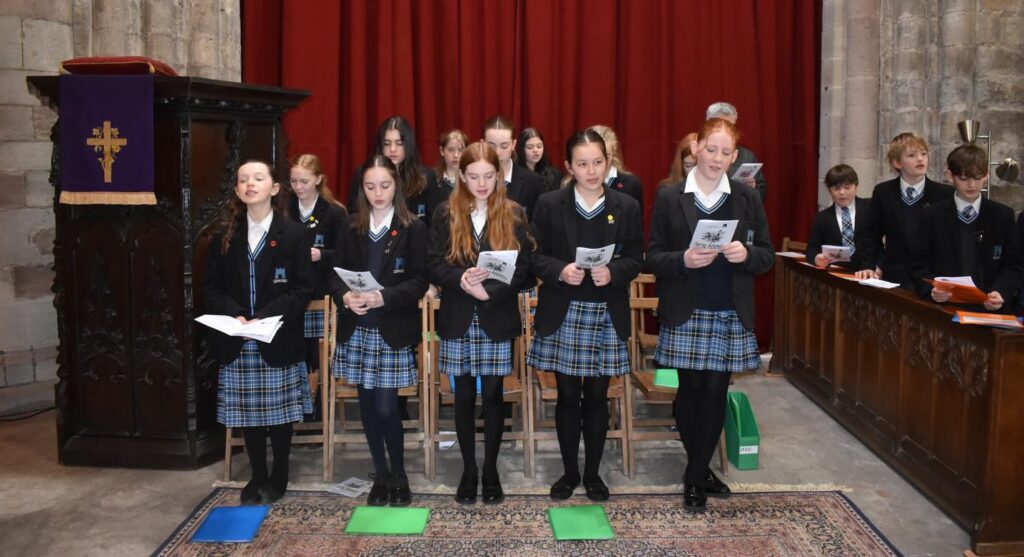
After this week’s assembly, Issy in Year 10 told us: “Singing is just fun. It is a great thing to do and it brings the whole school together. I don’t sing outside school but I started lessons when I was in Year 7 and now love singing.
“When we have singing I think it lightens the mood in the school for everyone and definitely helps pupils come together and develop friendships.”

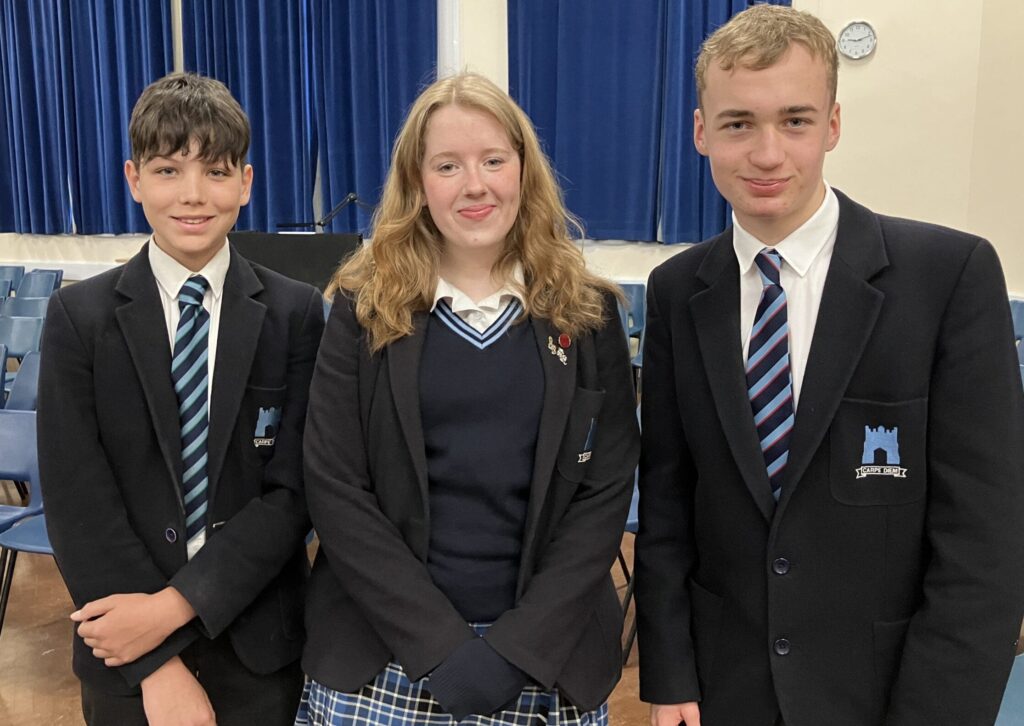
Oli said: “I like singing and dancing. It’s fun to do especially with songs you like, and as Issy said it brightens your day when you come to school and everyone comes together to sing and have fun.”
Henry added: “Singing allows me to express myself in different ways. I don’t sing at home, but we get to sing in assemblies and the house choir at Longridge and you definitely enjoy the days you’re singing.
“At my old school there wasn’t any singing, but a great thing about Longridge is that everyone does it. I definitely feel better on days when we’re singing at school. It makes you feel like a different person, more confident I think.”
Anyone who was fortunate to see the Senior School’s incredible production of ‘Six: the Musical’ earlier this year, followed up by the Juniors’ ‘Alice in Wonderland’ show this week will have a good appreciation of the talent being nurtured.


Dr Hardy and Dr Dalrymple, Director of Learning, wrote a school song three years ago to fit its motto, ‘Carpe Diem’, which is now sung with gusto in school and on sports buses before and after matches!
Mrs Humphreys added: “The lyrics of the school song bring to life the school values of CARPE – care, achieve, respect, persevere and excel – and I think that unites us when we’re singing.”
Dr Hardy, who also teaches Physics and Maths at Longridge, remains heavily involved in the wider community, as a performer and/or musical director with the Borders Chamber Orchestra, Berwick Male Voice Choir , Berwick Musical and Theatre Society, and Kelso Amateur Operator Society. He has also provided music tuition in both England and Scotland and so knows well the current challenges facing colleagues in and out of school.
Support for music is unique and has widespread benefits
He added: “There is a lot of work going into trying to keep music tuition available, but it is difficult. The support we have for music at Longridge is unique in many ways because we have the formal education, the lessons and great exam results, but also a valuable informal approach across the school, and that helps to encourage people to take up music.
“The pupils will take part in informal concerts, which is always lots of fun. They form duets or ensembles and practise themselves, before performing in front of their peers, and that builds confidence and belief.
“The development of listening to sounds, reacting and understanding, I am sure, leads to a positive rewiring of your brain – from the decoding, hand-eye coordination and physical and mental grasping of playing independently or as part of a bigger group – that has benefits for careers and life generally.
“It all builds confidence and it’s interesting to see how that filters into other areas of their education and outside school. For example, when it comes to doing a driving test, if you’ve already got to grade five or six on an instrument then you’ve passed 12 individually assessed tests and exams, and Longridge pupils appear to see a driving test as just one more. The pupils talk about not being nervous about the driving test, and other out-of-school tests or exams, which I find interesting.”
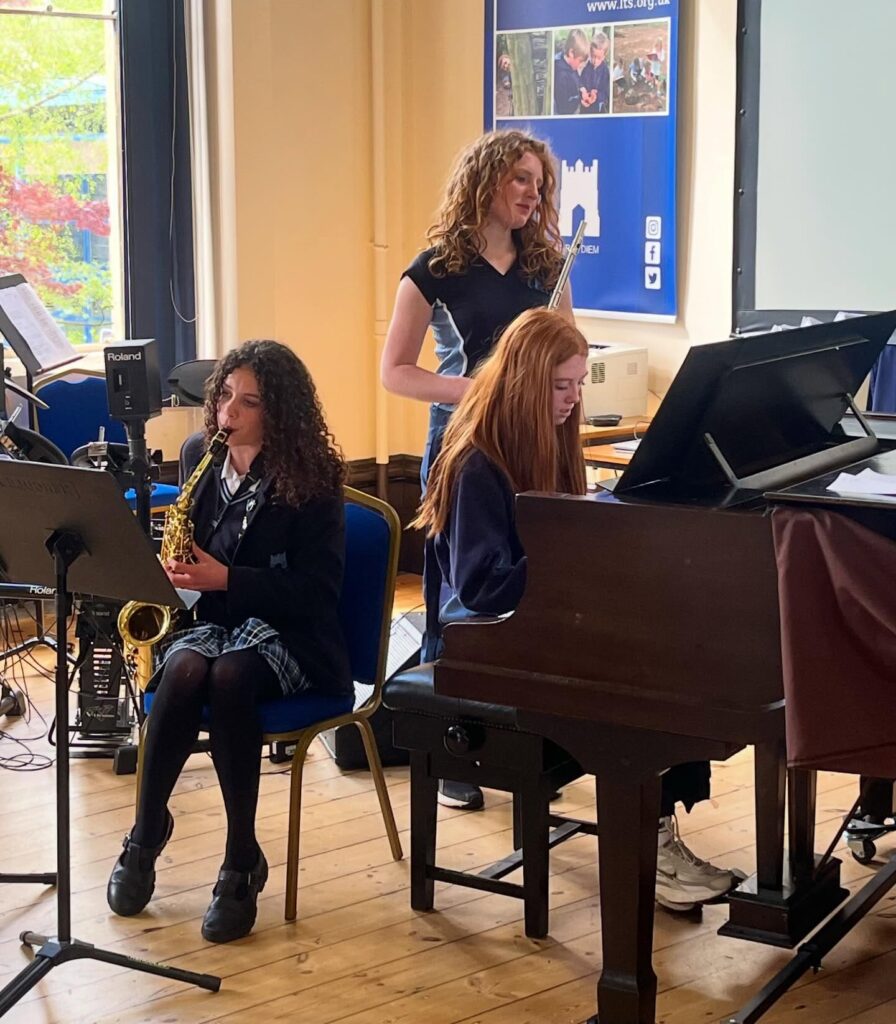
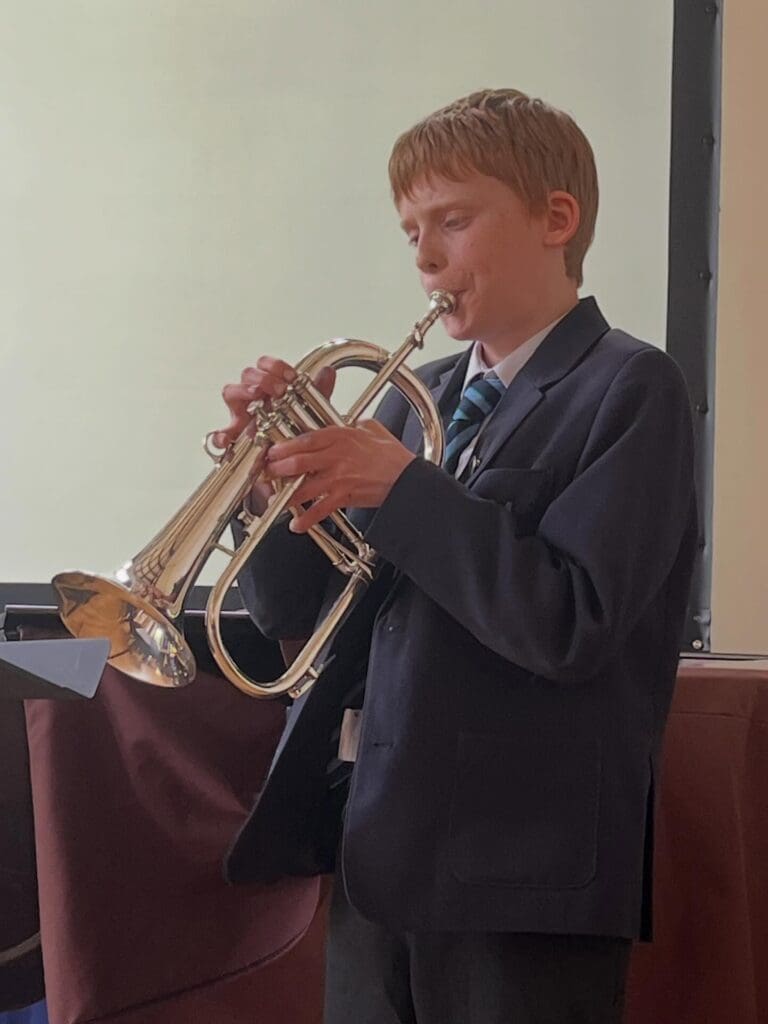
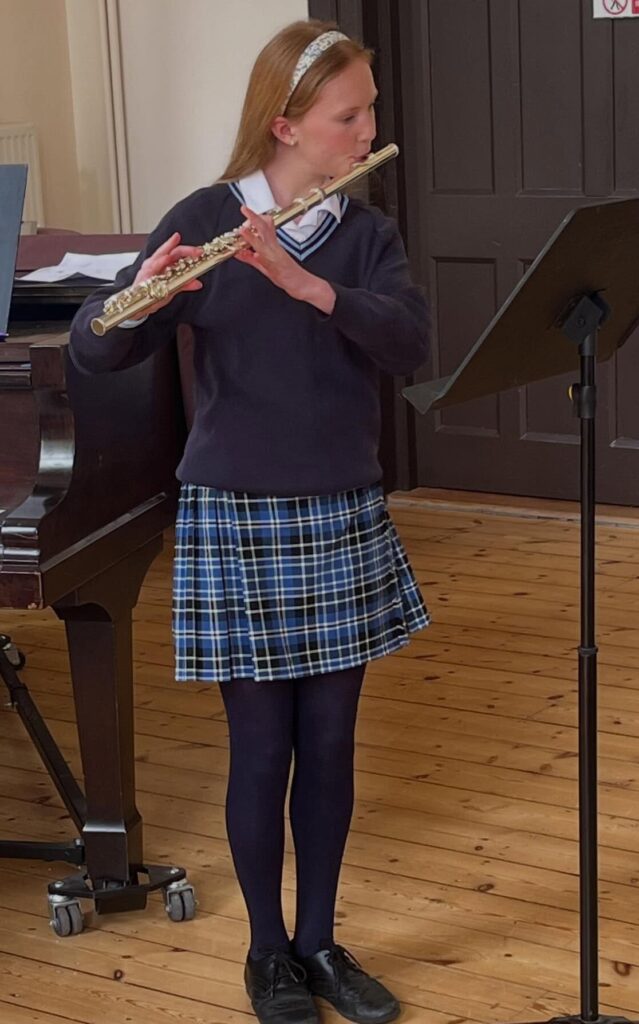
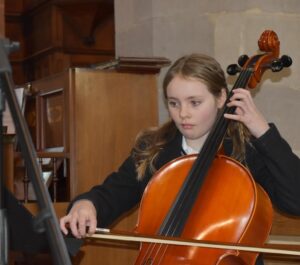
Longridge’s music network includes two singing teachers alongside teachers of strings, brass, drum, guitar and wind instruments. One of the peripatetic teachers, Mrs Prentice, attended the Royal Conservatoire of Scotland and then the Royal Academy in London and has taught children and adults across the country for the past 20 years.
She joined Longridge in 2023 and teaches clarinet, saxophone, flute and piano. Her pupil group has grown from an initial three pupils to 30, and they range from junior pupils being introduced to instruments on the fun bus ‘Mabel’ to seniors winning awards at leading UK competitions. One pupil is now studying at the Royal Conservatoire of Scotland.
“The beauty for us as teachers,” she said, “is seeing how music develops in a classroom but then transcends it. One girl came to me very worried because she was struggling with all her A-Levels, for example. We created time for her to work on her music after school and she became much happier and more confident right across her school work.
“Music can pick people up, give them discipline and focus, and help them find self-belief. I also find music pupils are caring, I think because music groups develop that understanding of challenge, difficulty, the need to keep trying to get something right, and help and support others for it to all come together.
“For me, the great thing is that you don’t have to be academically gifted to fall in love with music and have a great time – anyone can play music.”
Scholarship programme supports musical talents
Longridge also has a music scholarship programme. Scholars are selected by means of an audition and interview process, and alongside their schooling they receive extra coaching and performing opportunities. A recent concert they performed with the Berwick Concert Band was led by Gordon Campbell, the BBC Jazz trombone player.
Dr Hardy added: “People will ask why music is important, and at the same time I hear many adults in conversation saying ‘I used to sing or play an instrument, and I regret giving it up’.
“So, if the trend we’re seeing across the UK is for many children to give up before or in their teens, before they have actually got to that crucial point of mastering an instrument – nobody just picks up an instrument and can play – and we don’t help them, then we are letting down our next generation.
“That is why we are happy to be bucking the trend and ensuring music remains a strong part of Longridge life for all pupils..”



Post / Longridge proves a UK outlier in bucking musical trend
Share This Page